
The Battle of Canterbury brought the drama as the Malice at Lambeth Palace is still recovering. In the end, Richard Hooker pulled up his three legged stool, and told Thomas Cranmer to grab his prayer book and take a nice little walk down the middle way. Final score Hooker 66.88% to 33.12%. The stool stays undefeated 🪑👑
But we’re just getting started, because today it’s Amy Carmichael vs Edith Stein. The Missionary powerhouse vs Carmelite philosopher 🔥 Both lived fearless faith. Both changed lives. Both make this vote VERY unfair 😅
Only one can advance so it is up to you. Vote now and keep sharing with us how you’re living into Lent Madness!!! 🙌
Amy Carmichael
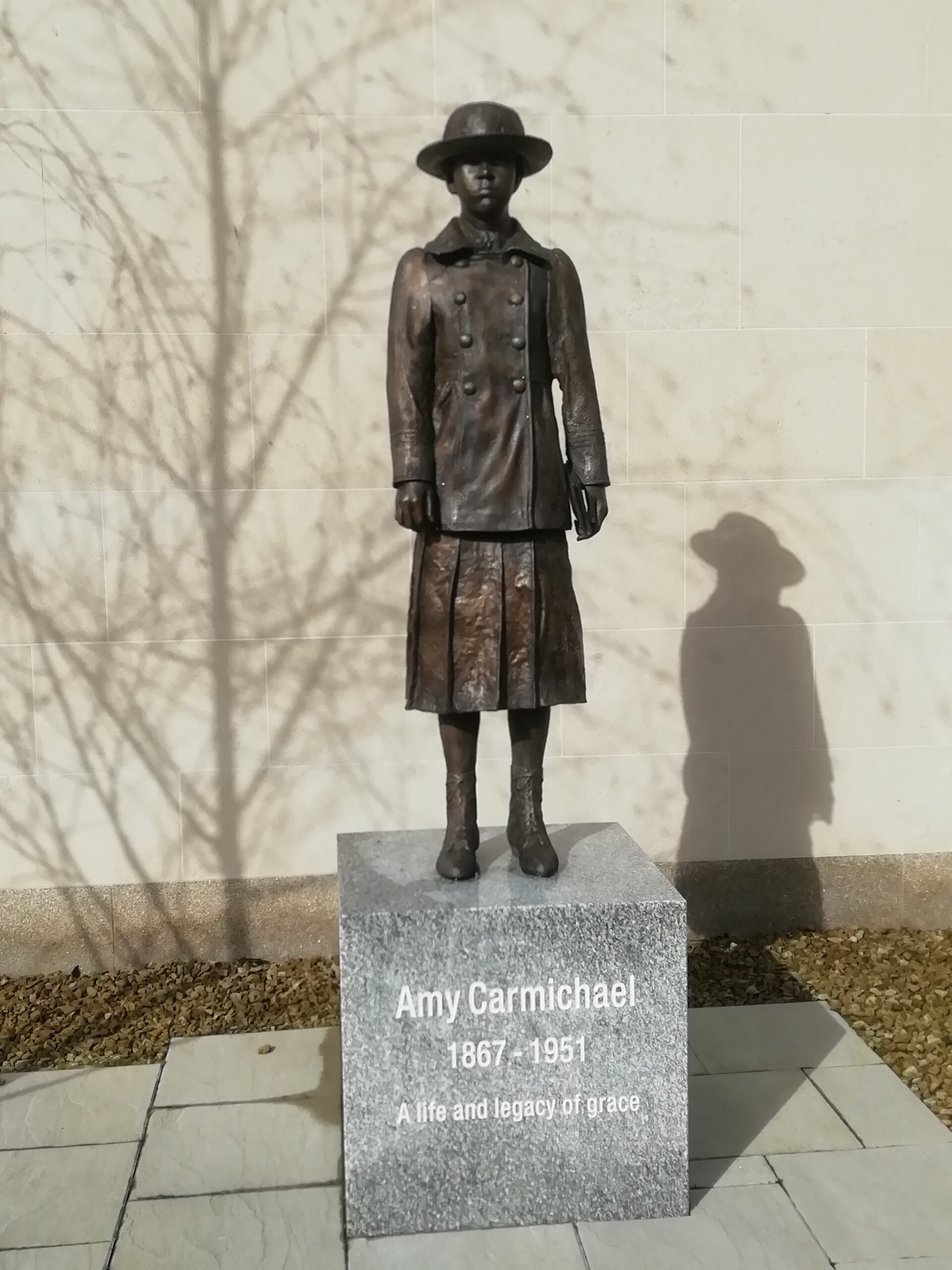 Amy Carmichael was an Anglican missionary to India throughout the early 20th century.
Born in Ireland in 1867, Amy Carmichael was raised in a very devout Anglican family. Her father moved the family to Belfast when she was 16, but sadly died two years later. However, Amy and her family were already hard at work spreading the Gospel. In Belfast, they started a Sunday School for the girls who worked at the nearby shawl factory. The school grew so quickly that it soon ran out of room. Amy saw an advertisement for a parish hall that could be ordered and assembled out of iron. She raised the money and set it up, calling it the Welcome Hall, in 1887. In 1889, she moved to Manchester to work with the factory girls there.
Meanwhile, she was dreaming of going overseas to do more missionary work. She had attended one of the first Keswick Conventions (gathering of evangelical Anglicans in Keswick, England) and was moved by stories about missionaries traveling overseas to spread the gospel and alleviate suffering. However, when she tried to apply to join the China Inland Mission, she was told that her health was too poor, and she had to postpone her departure.
Amy joined the Church Missionary Society and went to Japan, but stayed only about 15 months. She traveled to Bangalore, India, hoping that the warmer climate would help her health, and just decided to stay and work there. She was commissioned with the Church of England Zenana Mission.
In India, she was stationed in Tamil Nadu and began working with girls who had been abandoned to the local temples. In many cases, this amounted to forced prostitution for the girls. Amy began to take in the girls, slowly creating a whole orphanage for them, complete with a school, a farm, and a whole village to support them. She insisted her fellow workers give the children Indian names, and dress in the Indian ways, so as to better acculturate. She continued at Dohnavur for 59 years, until her death in 1951. The sanctuary she founded continues today, providing a source of healing, education, and nourishment for the whole community.
— Megan Castellan
Collect for Amy Carmichael
Almighty God, whose will it is to be glorified in your saints, and who raised up your servant Amy Carmichael to be a light in the world: Shine, we pray, in our hearts, that we also in our generation may show forth your praise, who called us out of darkness into your marvelous light; through Jesus Christ our Lord, who lives and reigns with you and the Holy Spirit, one God, now and for ever. Amen.
Edith Stein
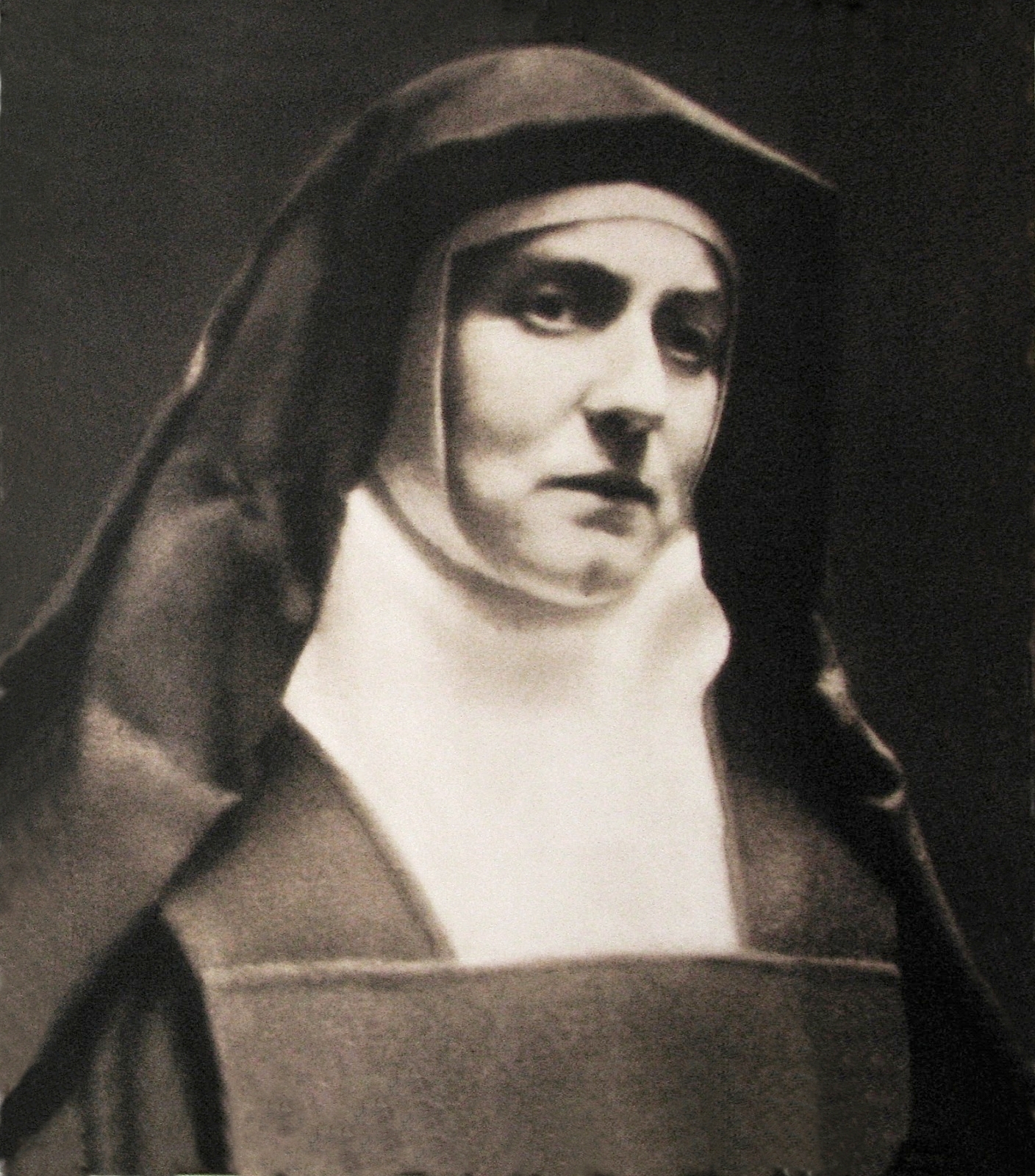
Edith Stein did not set out to become a saint. In fact, for much of her early life, she was unconvinced that God had anything to do with reality at all and dismissed the notion of the divine. A philosopher by training, Edith’s path to holiness ran through rigorous thinking, deep suffering, and a hard-earned faith.
Edith was born in 1891 into a Jewish family in Breslau, which at the time was part of Germany and now is in modern-day Poland. As a young woman, Edith identified as an atheist, convinced that reason alone could answer life’s deepest questions. She was exceptionally bright, and she pursued higher education at a time when few women did, eventually earning a doctorate in philosophy. Her studies eventually led her to mentorship under Edmund Husserl, one of the founders of phenomenology.
World War I disrupted everything. Edith served as a nurse, tending wounded soldiers and encountering suffering on an intimate scale. The experience sharpened her philosophical inquiry and quietly prepared her for a change she could not yet name. That turning point came in 1921, when she read the autobiography of Teresa of Ávila, reportedly in a single night! Her conversion to Christianity was launched right off the pages of that book. Soon after, she was baptized into the Roman Catholic Church.
Edith did not abandon her intellect when she embraced faith, though it must have been tempting to do so. Instead, she brought her formidable mind into conversation with theology, writing and lecturing on the relationship between philosophy, empathy, and the human person. Her Jewish heritage, her Christian faith, and her academic vocation were never separate compartments. Instead, she carried them as strands of a single, holistic life in pursuit of truth and meaning.
As the Nazi regime rose to power, Edith’s career options narrowed. Anti-Jewish laws stripped her of her teaching position, and in 1933, she followed a path that had been closed to her previously. She entered the Carmelite convent, taking the name Teresa Benedicta of the Cross, following the invitation of her faith to use her gifts to serve God and God’s people through her devotion.
In 1942, after being moved to the Netherlands where it was deemed safer for them, Edith and her sister Rosa were arrested by the Gestapo in retaliation for the public condemnation of Nazi antisemitism by the Dutch Catholic bishops. Many non-Aryan Roman Catholics were deported to Auschwitz, including Edith and Rosa, and were killed shortly after their arrival.
Canonized in 1998, Edith Stein stands as a witness to the unity of faith and reason, and to a holiness that refuses simplification. She reminds us that seeking truth with integrity can be a sacred act, and that discipleship may demand not certainty, but courage, clarity, and a willingness to carry the cross where it leads. What might she teach us today about the intersection of faith and reason?
— Samantha Smith
Collect for Edith Stein
Pour out your grace upon thy church, O God; that, like your servant Edith Stein, we may always seek what is true, defend what is right, reprove what is evil, and forgive those who sin against us, even as your Son commanded; through the same Jesus Christ our Lord, to whom with you and the Holy Spirit be all honor and glory, now and for ever. Amen.
88 comments on “Amy Carmichael vs. Edith Stein”
I was not familiar with Carmichael’s biography. I was deeply moved by her intercultural evangelism and her work protecting and rescuing young girls from a life of misery.
Not having heard of either of these women, it was a pleasure to read about them. I worked 24 years for a Catholic Mission Association. The best part of the job was meeting and staying in touch with all the missioners. I went to Brazil and Tanzania at my own expense to see them at their work. How can I keep from voting for Amy!
This is the most impossible choice yet. Could we please keep them both for the Elate Eight round? Please?
Both speak to me powerfully about what we face today:
Amy Carmichael because of the Epstein files and the deep-rooted misogyny they reveal and how we are still treating girls and women like garbage to be used and discarded for powerful men's (mostly) pleasure. Just re-reading Nicholas Kristoff columns on the trafficking of women and girls in the light of the ongoing Epstein revelations. Amy Carmichael created the possibility of a different life for young women whose lives were being thrown away.
Edith Stein because of the fascism we are now facing (plus of course her amazing, thought-provoking, courageous life.
Still can't choose . . .
I’m having trouble finding the celebrity bloggers.
it remains a mystery...
I love Amy Carmichael! She sets a great example of using the gifts she had I can’t believe she is losing
I was impressed by Amy, but Edith's work was influential when I was writing my master's thesis, so I had to vote for her.
Also, about this:
>Edith did not abandon her intellect when she embraced faith, though it must have been tempting to do so.
Um, no? Why would it have been tempting to do so?
Christianity has a fine tradition of very intellectual saints! And we are called to worship God with our whole heart *and mind*. 😀
"Her Jewish heritage, her Christian faith, and her academic vocation were never separate compartments." That's what swayed me. Well done, Samantha Smith.
Glad to see Megan Castellan back, too!
I related to Edith quite a bit, although I was raised by a Catholic mom with my Jewish father who survived the Holocaust in France (although his grandparents and cousins did not survive the death camps). I joined the Episcopal Church partly as it felt a natural fit for an intellectual, critical Jewish Catholic who didn't feel at home in either tradition. The EC and the three legged stool suit me well!!
However I was also impressed with Amy's devotion to helping female children (even while disabled) and maintaining their culture; especially in light of the recent revelations about Epstein and his buddies raping and trafficking (and murdering) girls and women. May Amy and Edith's faith, intelligence and courage inspire us all as we navigate these treacherous waters and try to help those who are suffering from evil systems and bad actors.
It was Amy all the way for me. She helped so many disenfranchised girls accepting them as they were and giving them a life with a future.
Still upset about Samantha's sentence above: 'Edith did not abandon her intellect when she embraced faith, though it must have been tempting to do so.' Why in the world should she have felt tempted to 'abandon her intellect'. Where did that come from?????
Today is February 26 and I am unable to find the readings for today. I enjoyed yesterday and voted - I want to read and enjoy today’s post. Where is it?
Amy Carmichael was truly dedicated for amost six decades even faced with continued ill health in overseas locations.