Day 2 of Lent Madness delivered a saintly showdown for the ages ⚔️✨
South Africa’s Archbishop takes down America’s first saint! Desmond Tutu defeats Elizabeth Ann Seton. It wasn’t without a fight, but Tutu moves on with joy and momentum 🙌🔥
Now onto a saintly showdown that spans the globe 🌍. It’s a classic East/West rivalry as Benedict of Nursia faces Basil the Great. The Rule of Benedict vs the Rule of Basil. A rivalry as old as the Church itself 📜✝️
In Christ there may be no East or West… but in Lent Madness, there can only be ONE 👑
👉 Check out Instagram & YouTube for the daily videos 🎥 🗳️ Read, watch, and VOTE!!!
Benedict of Nursia
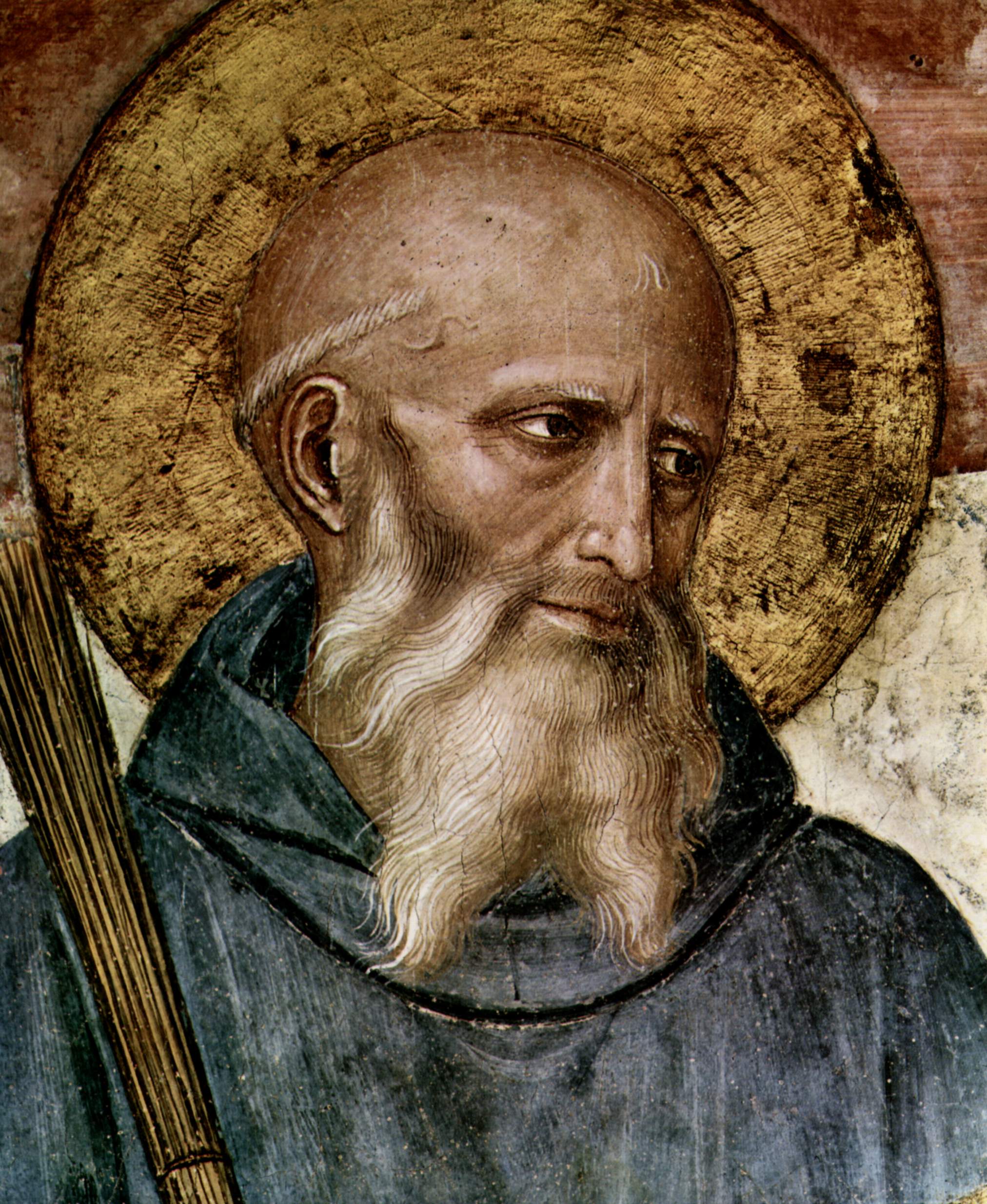 Saint Benedict of Nursia, the father of Western monasticism, was born into a wealthy family in Nursia, Italy, around 480 A.D. Wise beyond his years, he lived a life rich in miracles while forging a balanced Rule that would sustain monastic communities, and much of Western Christianity, to this day. He had a twin sister named Scholastica. Sent to Rome for a liberal education, Benedict made the journey with his nurse. Beyond disgusted by the immoral people and licentious lifestyles he encountered there, he fled thirty miles outside the city with his nurse, settling in the Enfide mountains. He then secretly withdrew even farther to a cave near Subiaco, living as a hermit for three years. The only exception was a monk named Romanus, providing him with bread and essentials through a rudimentary pulley system.
Such solitude could not last forever. Local shepherds discovered Benedict and eventually converted from their “savage life” to a more virtuous one. Word of Benedict’s way of life spread quickly—his reputation attracted both secular men and those aspiring to a more solitary life. He decided to build twelve individual monasteries, each with their own priory, and he oversaw all of them.
Around 530 A.D., Benedict moved to Monte Cassino, establishing two chapels that eventually morphed into a famous abbey. He seems to have again lived a life of solitude until word spread about what he was building. He made one major change: bringing the monks together under one roof, a shift towards communal life governed by an abbot and deans—an interesting decision for a man who once cherished living alone. The abbey soon gained widespread renown, drawing both dignitaries and laymen to converse with Benedict, prompted no doubt by reports of his miracles, especially those attributed to him raising the dead. He likely composed his guide “Rule” during this time to outline monastic life. Benedict ventured outside the walls of the monastery, into the surrounding area, where he cared for the population and tended to those most in need.
Benedict predicted many events in his life, including his own death. In 547 A.D., six days before he died, he instructed monks to dig his grave. Once it was completed, he fell deathly ill. With the caring support of his fellow monks, he went to the chapel, received communion, prayed, lifted his arms toward heaven, and died. Benedict was laid to rest in the Oratory of St. John the Baptist, which he built on top of Apollo’s altar. Faithful to the end, Benedict reminds us that while few are called to the cave, all are called to resist the world’s corruption, step away from its noise, and reorder life more fully toward God.
— Sara Kay Hill
Collect for Benedict of Nursia
Gracious God, whose service is perfect freedom and in whose commandments there is nothing harsh nor burdensome: Grant that we, with your servant Benedict, may listen with attentive minds, pray with fervent hearts, and serve you with willing hands, so that we might live at peace with one another and in obedience to your Word, Jesus Christ our Lord, who with you and the Holy Spirit lives and reigns, one God, now and for ever. Amen.
Basil the Great
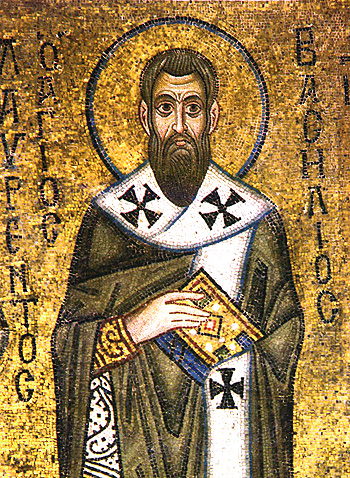 Saint Basil was a prominent theologian in the early church whose contributions are the foundation for worship today. Reading the introduction to his Wikipedia article is reminiscent of that one scene in Prince Caspian in which Peter writes a letter to Miraz, and at least a third of it is all titles — Confessor, Cappadocian Father, Doctor of the Church, Great Hierarch, father of communal monasticism in the Eastern Church, and Revealer of Heavenly Mysteries. It is no wonder the Church simply calls him “the Great” to save time!
But who was he - not the saint, but the man?
Basil was born around 329 in Caesarea of Cappadocia (modern-day Turkey) into a large, wealthy, and pious Christian family. A brilliant student, he became a scholar and a lawyer in his young adulthood. By all accounts, that would have been his life’s course, had it not been for his family’s faithful witness, especially that of his sister, Macrina.
While he was away at school, Macrina founded a religious community in their family home. Upon returning home and learning about this way of life, dedicated to God and community, Basil turned his eyes to the Gospel. He wrote, “I beheld the wonderful light of the Gospel truth, and I recognized the nothingness of the wisdom of the princes of this world.”
Drawing on his learnings, he and his friends formed their own monastery. He wrote about monasticism and, with Gregory of Nazianzus, compiled the Longer and Shorter Rules, which set the rhythm of communal monastic life. This writing became the foundation for monastic traditions in the Eastern Orthodox Church.
From there, he was ordained a priest and later named a bishop. In these roles, he pushed back hard on the popular Arian heresy - that Jesus and the Holy Spirit were creations of God and therefore subordinate to God. Not only was this heresy a threat to theology, but it was tearing Christian communities apart. He wanted Christianity united under a set of beliefs and advocated that Trinitarian theology be a part of that set. His writings on this subject shaped how we understand the Trinity today. Unfortunately, he did not live to see the end result of his work - dying two years before the Second Ecumenical Council that set the Nicene Creed as a foundation for our faith.
His legacy lives on, though, and not just through our theology. As a bishop, when not fighting theological battles, his mission was to care for the poor, the sick, and the lonely. He founded one of the first hospitals in the world and set the tradition of Christians sponsoring free healthcare. Sincerely, he was a great and honorable man.
— Bekah Scolare
Collect for Basil the Great
Almighty God, who has revealed to your church your eternal Being of glorious majesty and perfect love as one God in Trinity of Persons: Give us grace that, like your bishop Basil of Caesarea, we may continue steadfastly in the confession of this faith and remain constant in our worship of you, Father, Son, and Holy Spirit; every one God, for ever and ever. Amen.
110 comments on “Benedict of Nursia vs. Basil the Great”
Benedict is the Patron Saint of pothole repair crews. Basil is the patron saint of hospital administrators and reformers. My car says to vote for the former butcI have so many nurses in my family that I will vote for Basil. This is a close race!
SEC: THANK YOU for fixing the reply button.
I voted today for St. Benedict because of: "While few are called to the cave, all are called to resist the world's corruption, step away from its noise, and reorder life more fully toward God." I also found the collect very moving. As of 12:45 EST it's still neck-and-neck. This one is going to be a nail biter.
As an Associate of the Order of the Holy Cross, this was a no-brainer. But Basil holds a place in my heart for his theology.
A tough one today.
I am getting the emails late. Today I got the email to vote for Archbishop Tutu and Elizabeth Seton, not this one.
All honor to Basil the Great, but The Saint John's Bible was commissioned by the Benedictine Abbey of Saint John the Baptist in Collegeville, MN. Seeing and learning from the illuminations changed everything for me.
Almost forgot this Saturday vote!
Basil is great on & in so it’s the Great today with all his titles!
I did forget and so I'm sure that that is why basil
lost I shall never forgive myself
Go Benedict!! His rule is the deciding factor.
Loved "Not all are called to the cave..."
Wow! Unlike the first two saintly showdowns,this one is a much tighter race. As a long-time admirer of St. Benedict's simplicity and wisdom about work/life balance, the monk has my vote.
Sounds like we should be voting for Macrina instead of Basil.
It’s still neck-and-neck between these two early Christian worthies.
My vote has gone to the one who loses each day thus far. March to a different drummer. But after voting today, my guy might just win. Will enjoy keeping tuned in for this one!
I'm embarrassed to admit I'd never heard of Basil the Great. What a great person, indeed. And of course, his strong sister.
Two very admirable men. Tough for me to choose between them, but I will lean toward Benedict for his rule.
As a Benediction oblate, I voted for St. Benedict.
Can'tthe place to vote. I go around in a circle
I voted for Basil the Great! One of his most well-known quotes is, "The bread you store belongs to the hungry. The clothes you accumulate belong to the naked. The shoes that you have in your closet are for the barefoot. The money you bury deep in the ground to keep it safe belongs to the poor. You were unfair to as many people as you could have helped and you did not." Made me think very hard! He is a Saint for these times! Go, Basil!
Never heard this quote before, but agree with "made me think very hard"!
Basil, I love the herb. Basil for the win!
To my Morning Prayer group, Basil was not so Great. We think that the competition of ideas is good and Basil was intolerant of ideas with which he disagreed.
Won’t let me vote
Sudden surge of votes for Benedict. Now 400 votes ahead?
I voted for Benedict because his significance is almost impossible to overstate. While many saints shaped theology or defended doctrine, Benedict shaped Christian civilization itself. The Rule created a stable, ordered, prayer-centered way of life that preserved learning, cultivated virtue, and formed communities that carried the faith through cultural collapse.
Basil is great, but Benedict is foundational. The Rule is both profoundly spiritual and remarkably practical. Benedict did not just inspire holiness, he built a structure that makes holiness sustainable.
Benedict’s sister, Scholastica, is also a saint. She is considered to be the founder of the Benedictine nuns.
Kudos to both Celebrity Bloggers today for fine biographies of these 2 giants of the early Church. While I knew more about Benedict and his Rule, I was not familiar with Basil. I appreciate learning of his contribution to the theology of the early Church. I also appreciate how learned men were drawn to the Church early in her history, and both of these men are sterling examples. I finally came down on the side of Basil, but won't be disappointed with whoever wins today.
Difficult choice between two very good saints.
Gotta go one saint, or the other.
Can we give a 1/2 vote to each ... officially? 😉
St Basil was a champion of helping the materially needy, of whom there were many then. He definitely linked assisting the poor with the teachings & practice of Jesus. Plus, he walked the walk when it came to feeding the hungry, etc.
I wonder whether that aspect of St Basil has turned SOME contemporary Fundamentalists against him.
I voted for Benedict of Nursia.
BAsil's defense of the trinity gets my vote!
There seems to be a glitch that allows me to vote more than once. Was trying to see who won the match up and accidentally hit the vote button and seems like new vote was recorded
Where is February 22?
A late surge in what was a very close race makes me suspicious.
Basil was turned away quickly