And just like that… the pride of Wittenberg, Martin Luther, said “game over” and iced John Wesley’s heart with a huge win! 🏀❄️🔥 But don’t get too comfortable… we’re only warming up!
Now we’re sliding into the Modern Mercifuls portion of the bracket, where Archbishop Desmond Tutu takes on Elizabeth Ann Seton in a showdown of grace, grit, and joy 😇✨ Two absolute legends. One spot in the Saintly Sixteen. You decide!!
As always read the blogs, use the trading cards, watch the videos, and VOTEEEEE 🗳️🙌
Elizabeth Ann Seton
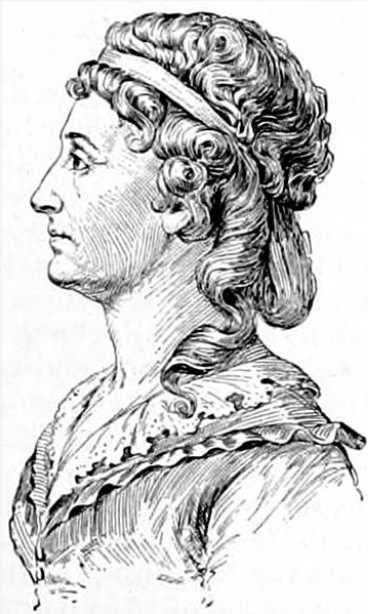 Elizabeth Ann Seton began life as a wealthy New Yorker and a member of Trinity Church. By the end of her life, she was a Roman Catholic nun who had, in effect, invented parochial schools in the United States. The life lived in between is a witness to her faith in Christ, her care for those in need, and her willingness to forge an unexpected path to follow God’s call on her life.
Elizabeth grew up in pre-Revolutionary New York City. Her mother was the daughter of a Church of England vicar, and her father was a surgeon known for his care of immigrants and his work during the Yellow Fever epidemic. From a young age, Elizabeth was all too familiar with the precarity of life. Her mother died when she was just three, and a stepmother later severed ties with the family, leaving Elizabeth motherless twice.
With her husband William Magee Seton, a successful merchant, she had five children in seven years and lived comfortably in New York society. Elizabeth was an Episcopalian through and through—Bishop Samuel Provoost officiated her wedding, and Bishop John Henry Hobart later served as her spiritual director. Like her father, she was always concerned with the needs of those around her; in 1797, seeing the poor conditions for those on the margins in downtown New York, she helped found the Society for the Relief of Poor Widows with Small Children.
The social ease and comfort of her young adult life did not last. A shipping crisis devastated William’s business, forcing the family to seek help from friends in Italy. The strain worsened his already poor health, and he died there at just thirty-four. Elizabeth, suddenly widowed, broke, and far from home with five children, experienced unexpected hospitality from the Italian Catholics she found herself amidst.
When she returned to New York, Elizabeth faced a crisis—not of faith in Christ, but of denominational loyalty. Drawn to the Catholic theology and practice that had tethered her in Italy, yet keenly aware of the social cost of conversion, she ultimately chose to be received into the Roman Catholic Church in 1805. The society she was born into could not understand Elizabeth’s conversion; anti-Catholic sentiment pervaded her social circles. Her oldest friends cut ties with her.
Still, Elizabeth persisted. She moved south to Maryland, where Catholicism was more accepted, and opened a school. She founded the Sisters of Charity of St. Joseph’s—the first religious community for women established in the United States—and became a nun. Her persistence led to the founding of many schools, orphanages, and hospitals that shaped American Catholic life for generations and laid the groundwork for the parochial school system.
Elizabeth was a motherless mother who buried two daughters, lived with constant financial anxiety, and endured chronic illness. She died in 1821 at age forty-six. But in those relatively few years on earth, she forever changed the scope of American Catholicism. In 1975, Pope Paul VI made her the first American-born saint.
Elizabeth Ann Seton reminds us that God does not wait for our lives to be stable before calling us. Grace meets us in the unraveling—and builds something new from what remains.
— Julia Offinger
Collect for Elizabeth Ann Seton
Give us grace, O God, to love you in all things and above all things; that, following the example of your servant Elizabeth Ann Seton, we might express our love for you in the service of others. Through Jesus Christ our Lord, who lives and reigns with you and the Holy Spirit, one God, in glory everlasting. Amen. (LFF p 25)
Desmond Tutu
While he may not be officially canonized, Archbishop Emeritus Desmond Tutu exemplifies the Episcopal Church’s definition of a saint: “a holy person, a faithful Christian, one who shares life in Christ.” He serves as a model for following in the footsteps of Christ, inspiring us not to remain silent or become discouraged in the face of injustice. He also demonstrates the power of forgiveness and loving our enemies.
Throughout his life, Desmond Tutu was rooted in the concept of ubuntu, the interconnectedness of human beings. He emphasized that racism was against the will of God and constantly advocated for “the least” (Matt 25:37-40), recognizing that God Ksides with the poor, the oppressed, and the victims of injustice. “The Arch,” as he was known, fought against apartheid in South Africa, first confronting political leaders demanding justice, and when that failed calling for boycotts and sanctions against South Africa.
Desmond was born in Klerksdorp, South Africa. After graduating from college, he taught high school and met his wife, Leah. Following the 1953 Bantu Education Act, which enforced segregation in South African schools, he left teaching to focus on theology. He was ordained as a priest in the Anglican Church in 1960, obtaining his Master of Theology in England in 1966 and teaching theology in South Africa until 1972. In 1975, he was named the Dean of St. Mary’s Cathedral in Johannesburg, the first black man to hold this position, and he became the bishop of Lesotho in 1976. He served as the first black General Secretary of the South African Council of Churches from 1976-1978. In 1985, Tutu became the Bishop of Johannesburg, and in 1986, he was named Archbishop of Cape Town.
Tutu could be prophetic, forceful, and sometimes even offensive in his words, yet his friend Farid Esack reports him saying, “Whether I like it or not; whether he likes it or not; PW Botha [the prime minister and major enforcer of apartheid] is my brother, and I must desire and pray for the best in him.” He was known to spend four hours on his knees each day in silent contemplation and commenced every meeting, no matter who was present, with prayer.
In 1984, Tutu was awarded the Nobel Peace Prize for his role leading the nonviolent campaign to end apartheid. From 1996-1998, he led the Truth and Reconciliation Commission to investigate apartheid-era crimes, establishing a model where truth is the foundation for forgiveness and reconciliation. When he retired in 2010, he was granted the title Archbishop Emeritus. He died in 2021 and lay in state for two days in an inexpensive pine coffin per his request.
— Emily Kiel
Collect for Desmond Tutu
Heavenly Father, Shepherd of your people, we thank you for your servant Desmond Tutu., who was faithful in the care and nurture of your flock; and we pray that, following his example and the teaching of his holy life, we may by your grace grow into the stature of the fullness of our Lord and Savior Jesus Christ; who lives and reigns with you and the Holy Spirit, one God, for ever and ever. Amen.
141 comments on “Elizabeth Ann Seton vs. Desmond Tutu”
I heard Archbishop Tutu preach and received communion from him at All Saints' Church Pasadena--a great memory.
After 12 Captcha photos and diligently selecting all squares with cars, traffic lights, motorcycles, and so forth I am frustrated and have just broken my Lenten resolve to avoid foul language. I give up. Both candidates are worthy of my vote, I believe, but apparently Captcha doesn't think I am worthy of voting.
GET RID OF THIS INFURIATING STEP please.
This one is not fair....
Setting aside my regional enthusiasm for Mother Seton of Emmitsburg, Maryland, I vote for Archbiship Tutu out of respect for the Truth and Reconciliation Commission. May we have such leadership, mercy, and grace in our times.
I love hearing from commenters who have personal experiences involving Desmond Tutu and Elizabeth Ann Seaton! Keep them coming.
Having met Desmond Tutu and heard him speak he has to be my choice today!
No contest today! The Most. Rev. Desmond Tutu has long been one of my heroes - a disciple who never failed to speak truth to power.
Elizabeth had few resources Tutu had many. She did important things for the common people. Thus my vote for her. Tutu did what South Africa needed in his time. He is to be spoken of.
Conclusion: Elizabeth worked to better all peoples lives & started a process of education most likely not matched in our society. Desmond was a community organizer not to be unkind but his fight remains to this day.
Tough one. One of those competitions where you hate to see a loser. I went with my first gut choice..The Arch.
The first Episcopal Church I belonged to, the Church of St. Andrew on Staten Island,NY is the resting place of Mother Seton’s father and other family members. Her grandfather, Richard Charleston, was the rector during the Revolutionary War. As a side story, Charleston sent a teenaged ‘house servant (ie ‘slave’) to England with a British general. The young man, Bill Richmond, became a cabinetmaker, tavern owner and renown bare-knuckle boxer in London.
A reply @kzc. (SEC, please fix the reply button. I'm going to keep saying this every day until either it's done or "reply" disappears as an option.) In my regular devotions, the story of the woman taken in adultery rolled around. The obvious moral of the story is we have no right to judge. And Spirit said to me, "How about the current President?" (although the name was used rather than the title). My goodness. I certainly am judgmental of him. It's hard to make discerned moral judgments on actions and still not have judgmental feelings about the person! I'm with you, kzc -- I'm not there yet.
I remember seeing footage of Desmond Tutu voting for the first time - his joy was manifest for all to see. His work with the Truth and Reconciliation Commission is a constant source of inspiration. I heard him speak about a class he taught in a theological college on Christian love. He began by announcing that everyone would receive the top grade. The A grade students all complained but he won them round. How could I vote for anyone else.
Feel TuTu devoted most of his life to helping people. Seton started an order of nuns.
I click on 'vote' but don't think it counted...
Actually, that "I'm not there yet" was Lois Alworth. Sorry; got mixed up because I couldn't see the comment I was actually replying to.
Tutu spent his entire life helping people. Seton had rough times, but not the same devotion.
Technically, the write up says her friends abandoned her.
This is tootoo difficult. I voted for the first native American saint, who predated the first indigenous American saint by some forty years. I sympathized with the precarity of Elizabeth’s life and wanted to affirm her solidarity with the people who embraced and supported her. We all face precarity now as capital seeks to overcome its contradictions by corrupting governments into institutions for perpetual war. While Muslims practice Ramadan in a Gaza that the U.S. and Israel plot to cleanse ethnically for its land and resources, I hope to be as steadfast as Elizabeth in honoring and “neighboring” a warm and faithful people: the Palestinians. What Would Jesus Do? Solve the problem of denominational loyalty by becoming Muslim. Let us fast from xenophobia and Islamophobia particularly now that the U.S. is ramping up propaganda for an illegitimate and unjust war against Iran. Let us fast with our Muslim brothers for justice and dignity for all God’s people.
Is the link for the trading cards available? They are mentioned in the post, but a link .... ? I saw it somewhere, but where, oh waily, waily!
My vote this round is for Desmond Tutu. I loved his friendship with the 14th Dalai Lama.
For me, a former member of the staff of Trinity Church and well aware of the witness of Elizabeth Ann Seton and her special place in the life of the church in New York and beyond, Desmond Tutu's ministry and witness are more of our time and he was very much supported by the Trinity Grants Program for his work to help dismantle Apartheid in South Africa. Tutu's heroic position firmly based in the Christian tradition of social action coupled with a profound theological anchor gets my vote-but it was close!
Yesterday's choices were maddening. Today's choices are diabolical. It is time to speak to a manager. I was born in a Sisters of Charity hospital and received my high school and college education in their schools. It will be heart-breaking not to see her advance in the Saintly Sixteen!
Two tough ones in a row.
I believe one of the requirements for incluson in Lent Madness is to be recognized by a sanctoral calendar. The bio begins by saying that Desmond Tutu is not. The Supreme Executive Council should disqualify him and award the day to Mother Seton, IMO.
Agreed!
Or give us the Rev. Fred McFeely Roger’s, PCUSA, in next year ‘s bracket.
Tough choice today. Both St. Elizabeth Ann Seton and Archbishop Emeritus Desmond Tutu are great people to try to imitate as much as possible with God's grace helping always. As a priest who waited too long and worked too hard to get there, I voted for the Archbishop today.
Why can't we see all of the comments todgether? Old comments vs. new comments? Who cares? Post them all, IMO
And ... No captcha pics show up when I vote. Others get them?
None yesterday. 3 today!?!
OK
First you gave us 2 fantastic people
Than you had us click on pictures
REALLY
I've been voting for years and haven't had to go thru this; didn't have to yesterday
But yes, a very difficult decision
I had the privilege of visiting St. George’s Cathedral in Cape Town and going to the crypt (now a lovely café) where Tutu headquartered the fight against Apartheid. It was humbling to sit in his big red chair, knowing this was the epicentre of resistance. Tutu used his gifts of humble diplomacy, gentle wit, finding common ground and bringing people together in “Ubuntu” (I am because You are). His actions not only changed the direction of South African civil rights, but also rippled around the world exemplifying peace through action. His faith and statesmanship are sorely needed today. Archbishop Desmond Tutu for the Golden Halo.
As a strong believer in the role of joy in spirituality, I am drawn to The Arch over equally blessed Seton. I read a book about a conference he led with the Dalai Lama that spoke of their joyful friendship. I think we need more joy in our faith, and The Arch is a splendid example.
I wish Mrs. Seton had not come up against a titan such as Mr. Tutu so early in the match. I wished to vote for her but could not justify not voting for him.
can't vote, but when I can it's for Bishop Tutu. my church, St Marks, Altadena was lost in the Eaton Fire January 7, 2025 and we had a stained glass window of Bishop Tutu. he was able to come to us when the window was dedicated. There was a reception on the school field and the bishop was dancing on the platform. our Diocesan Bishop was horrified