Welcome to the first matchup of the 2026 Saintly Smackdown! Join Fr. Christian and Fr. Michael for a fast, fun season preview as they break down a few favorite matchups and set the stage for another wild ride toward the Golden Halo:
And now to decide between our first pair of saintly competitors...
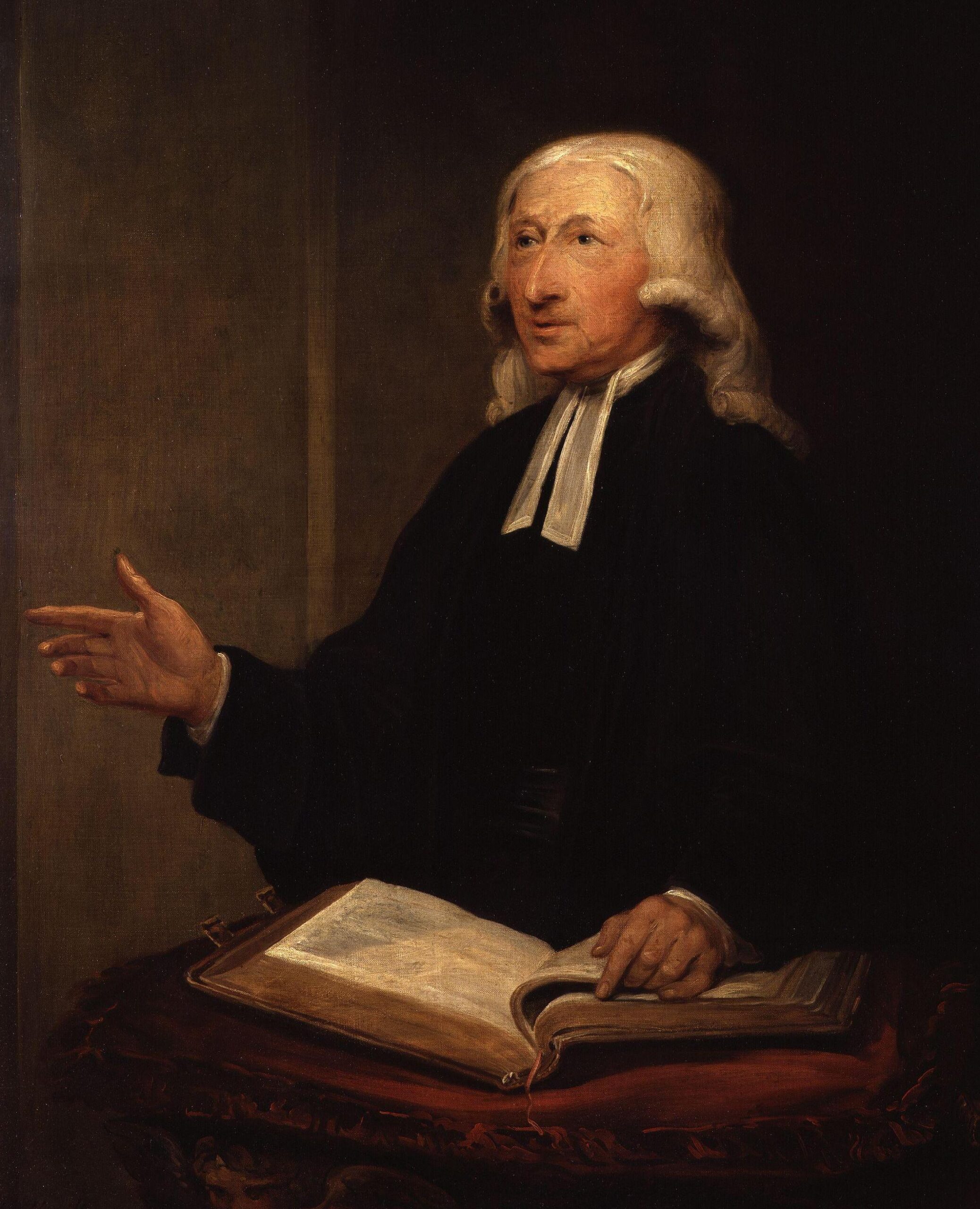 John Wesley was born in Epworth in 1703 as the 15th (!) child of his parents. His family tree already had many a cleric in its branches. He was educated by his mother Susanna until age 11, then attended boarding school and later Oxford, where he formed and led an organization known as the Holy Club. While the name was likely given to mock him and his cohort as religious fanatics, John Wesley came to take holiness quite seriously. He was profoundly influenced by William Law’s A Serious Call to a Devout and Holy Life, and ordained an Anglican priest in 1728. He would in turn come to exercise a profound influence on the Church.
But first, he would experience colossal failure. He traveled to Savannah, Georgia, to be part of the life of the newly established colony. En route, he encountered two things that would have a lasting impact on his life and ministry: Moravians and a young woman named Sophia Hopkey. The Moravians helped shape his theology, and Sophia captured his heart. However, when he later took advice to break off the relationship, he neglected to mention this to her. She then married another man, and when she eventually attended church again, John denied her Communion. This caused a scandal, and John was placed on trial. He fled back to England after only a couple short years in Georgia.
It was at a Moravian meeting that John’s heart was strangely warmed in his famous Aldersgate conversion experience. He began preaching publicly outdoors but eventually drifted away from the Moravians and formed the Methodist Society. The Methodists, under John’s leadership, allowed lay people to preach and refused to be confined by parish boundaries, both unpopular choices among the religious establishment of John’s day. But their willingness to do what they thought needed to be done, rather than only what the church would permit, led to significant growth in attendance and piety among the budding Methodists, even as it strained relations with the Church of England. When the Bishop of London refused to ordain a Methodist to be sent to the United States following the American Revolution, John Wesley ordained Thomas Coke as a superintendent and a number of others as presbyters, leading church officials to ask, “Wait, can he do that?” and likely cementing the division between the Methodist Society and the Anglicans. John, however, remained an Anglican until his death in 1791.
While portions of John’s life may not be the sort of thing we want to emulate, his influence on the church cannot be denied, and his serious and methodical approach to holiness can have tangible benefits for those who would like to take sanctification seriously.
— Ian Lasch
Collect for John Wesley
Lord God, you inspired your servants John and Charles Wesley with burning zeal for the sanctification of souls and endowed them with eloquence in speech and song: Kindle such fervor in your church, we entreat you, that those whose faith has cooled may be warmed, and those who have not known Christ may turn to him and be saved; who lives and reigns with you and the Holy Spirit, one God, now and for ever. Amen.
Martin Luther
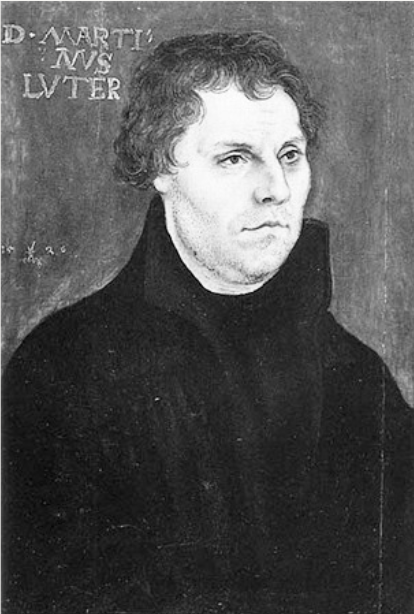 Priest, theologian, teacher, and excellent list-maker, Martin Luther strove to reform the church he knew, and in the process, reformed the Western Church for all time.
Born to Hans and Margarete Luther in 1483, Martin grew up in what we know now as eastern Germany. Martin succeeded in school early on, and went to the University of Erfurt. His father wanted him to become a lawyer, but Martin felt called to the church, becoming an ordained Augustinian friar in 1507. (He doesn’t seem to have been excited about this decision, and described the period pursuing ordination as a time where he had lost contact with Christ the Comforter of his Soul.)
His superiors, worried about him, assigned him to further theological work and teaching, reasoning that this would prevent Luther from further excessive rumination. It only partly worked. Luther continued to excel in theology, teaching at the University of Wittenberg, and receiving his doctorate in 1512. He continued teaching at Wittenberg for the rest of his life.
While he was teaching at Wittenberg, Luther studied the Psalms, Hebrews, Romans, and Galatians. It was then that he became convinced that salvation was utterly and entirely a gift of God’s grace. Faith, he argued, is something God gives to the believer rather than a work of human will.
Around the same time, in 1516, Rome sent a Dominican friar to Germany to raise money to rebuild St. Peter’s Basilica by selling indulgences. This did not please Martin Luther. He wrote a lengthy letter to his bishop, listing out his objections in detail. This letter was translated and circulated among the towns in Germany, and became known as the 95 Theses.
Luther’s arguments (that the Church should not be charging money for forgiveness of sins, since only God could do that; that the Pope had more than enough money on his own to build buildings; that the Pope and church councils do not have the right to override Scripture and are not infallible; etc.) had been made before. But because of the printing press, the increasing unrest among the peasant class, and now some support among the German nobility, his writing ended up launching what became the Protestant Reformation. Luther was excommunicated by the pope in 1521, but continued his preaching and teaching under the protection of the secular rulers of the area.
By the time he died in 1543, he and his compatriots had laid a firm foundation for a new way of experiencing Christianity and a more gracious way of being in relationship with God.
— Megan Castellan
Collect for Martin Luther
O God, our refuge and our strength, who raised up your servant Martin Luther to reform and renew your church in the light of your word: Defend and purify the church in our own day and grant that, through faith, we may boldly proclaim the riches of your grace, which you have made known in Jesus Christ our Savior, who with you and the Holy Spirit, lives and reigns, one God, now and for ever. Amen.
163 comments on “John Wesley vs. Martin Luther”
Put on your seatbelts, Lent Madness Viewing Public! These guys are zany!
John Wesley’s “methods” changed the quality of family life for countless working people in England, Wales and Canada. Being a Methodist called for self discipline and hard work, usually letting go of alcohol, and honoring family ties.
Self discipline? Hard work? No alcohol? Family obligations? Good times! Where do I sign?
Lost without a printed booklet. Truly madness this year.
Am I really the first comment on the first vote in Lent 2026? My husband grew up Lutheran and we attended a Lutheran church for the first several years after we were married. I had been raised in the UCC and the ELCA is where I learned to love the liturgy, and also where I learned that God loves me as I am, a sinner. I am thankful for those few years as a Lutheran. They have forever informed my beliefs.
I just love the fact that his heart was strangely warmed. Luther made a bigger change in Christianity but Wesley went through a serious experience. Would we all be so blessed.
Wow! Starting right out with two major players head to head! Such madness!!
I understand how important Luther is, but I'm an Armenian at heart so it's Wesley all the way for me!
Let’s kick this year off right with a big win for warmed hearts, method users, and Anglican’s with a little personal experience! John Wesley in round one!!!
...even if I can't spell Arminian...
This is not faaaaaaaaaaaaaaaair! But I had to vote for Luther. I wouldn't be alive if it weren't for him. My mom went to Japan as a short term Lutheran missionary to teach English and met my Japanese Lutheran pastor dad. But I did pay my respects to the Methodists by attending a Methodist college...
Although my first impulse was to vote for Wesley as I am a former Methodist, I had to vote for Luther because of how his theology changed the church. The idea that God's grace is freely given is one that resonates with most Episcopalians now and separates us from the past.
You don't make it easy! Luther was one of the most influential men in modern history but Wesley also had great impact on British and American history. Since I was raised a Methodist, I'll vote for Wesley (keeping in mind his gifted brother).
I voted for John Wesley! The rule that divorced people are prohibited from receiving Holy Communion is ridiculous and I admire John Wesley for defying the rule!
Your vote buttons don’t work. When you click nothing happens
Wesley opposed slavery.
Luther opposed Jews.
I vote for Wesley.
Martin Luther had a greater struggle than Wesley as he did battle with the Roman Church which was very powerful in the day.
My Methodist relatives, lay preachers, and Wesley's hymnographer brothers - voting for John Wesley today.
I'm Anglican-Episcopal, thus more familiar with John Wesley than Martin Luther. It's the "dry" church next door, with all the great melodious hymns.
The Roman church at that time deserved the split, but it would be wonderful to reconcile all denominations. The Lutherans are also good people.
My vote is John Wesley.. and time will tell if I'm voting for the losing side yet again.
Wesley supported abolishing the African slave trade.Luther wrote a 60K word treatise against the Jewish people.That's not something to celebrate, is it.
So Wesley ghosts a lady and then denies her the Sacrament? Yikes. I'll go with the guy with the beer.
The sexist or the antisemite? I'll go with the sexist.
As a lifelong Methodist I am compelled to vote for John, but I also love that he was a man with very public flaws that didn't shrink away into the shadows but stayed committed to God in his head until his heart caught fire.
Starting out with the big boys! My defiant side had to go with Martin. I get pretty worked up at unrighteousness. I get my knickers in a twist when God’s will is spun to satisfy and support one’s own self centered goals. I abhor tossing the marginalized onto society’s ash heap. If we are to identify as Christians we must follow the teaching of Christ. I see this in Martin.
Luther was anti-Semitic and encouraged abuse of people he disapproved of. Couldn't vote for him, however his theology was a positive thing.
I found this passage slightly confusing and would appreciate some insight. Was the scandal that John Wesley denied Sophia communion or that they had a romantic relationship?
"Sophia captured his heart. However, when he later took advice to break off the relationship, he neglected to mention this to her. She then married another man, and when she eventually attended church again, John denied her Communion. This caused a scandal, and John was placed on trial."
I had to vote for John Wesley who founded Christ Church in Savannah where I was baptized by F. Bland Tucker, also a saintly man who refused to reject the Black worshipers who came to worship at our church in I believe the late 50's.
For whatever reason, I am not being allowed to vote.
We have all waited 365 days. Let the games begin!
Luther started an argument. Wesley started a movement. Luther posted faith on the door. Wesley took faith outside the door.
https://www.facebook.com/reel/1458247639298026
At first this was a hard choice because my initial inclination was to choose Luther. I ended up voting for Wesley because I abhor antisemitism and could not in good conscience overlook that aspect of Luther. I find it endlessly interesting that Wesley had his conversion while listening to a reading of Luther's Preface to the Epistle to the Romans, which happened at Aldersgate.