
Monk Madness did NOT disappoint 😤🐪 The father of all monks showed exactly why he holds that title as Anthony the Great proved too much for Paul of Thebes, taking the win 57.16% to 42.84% 🏜️👑
But now we head over to the Apostles & Allies side and this one is exactly what it sounds like…A group of DOZERS vs a DOUBTER 😅🔥
The Apostle to India, Thomas the Apostle, squares off against Ephesus’ most well-rested crew, the Seven Sleepers of Ephesus 😴⚔️
One brought the Gospel across continents, the others took a miraculous nap that rings out through the Abrahamic Faiths
They say styles make the matchups and this one is WILD 🤯 Can Thomas outlast this Magnificent Seven? Or will the Sleepers dream their way into the Saintly Sixteen? Only one advances… YOU decide 🗳️🔥
Seven Sleepers of Ephesus
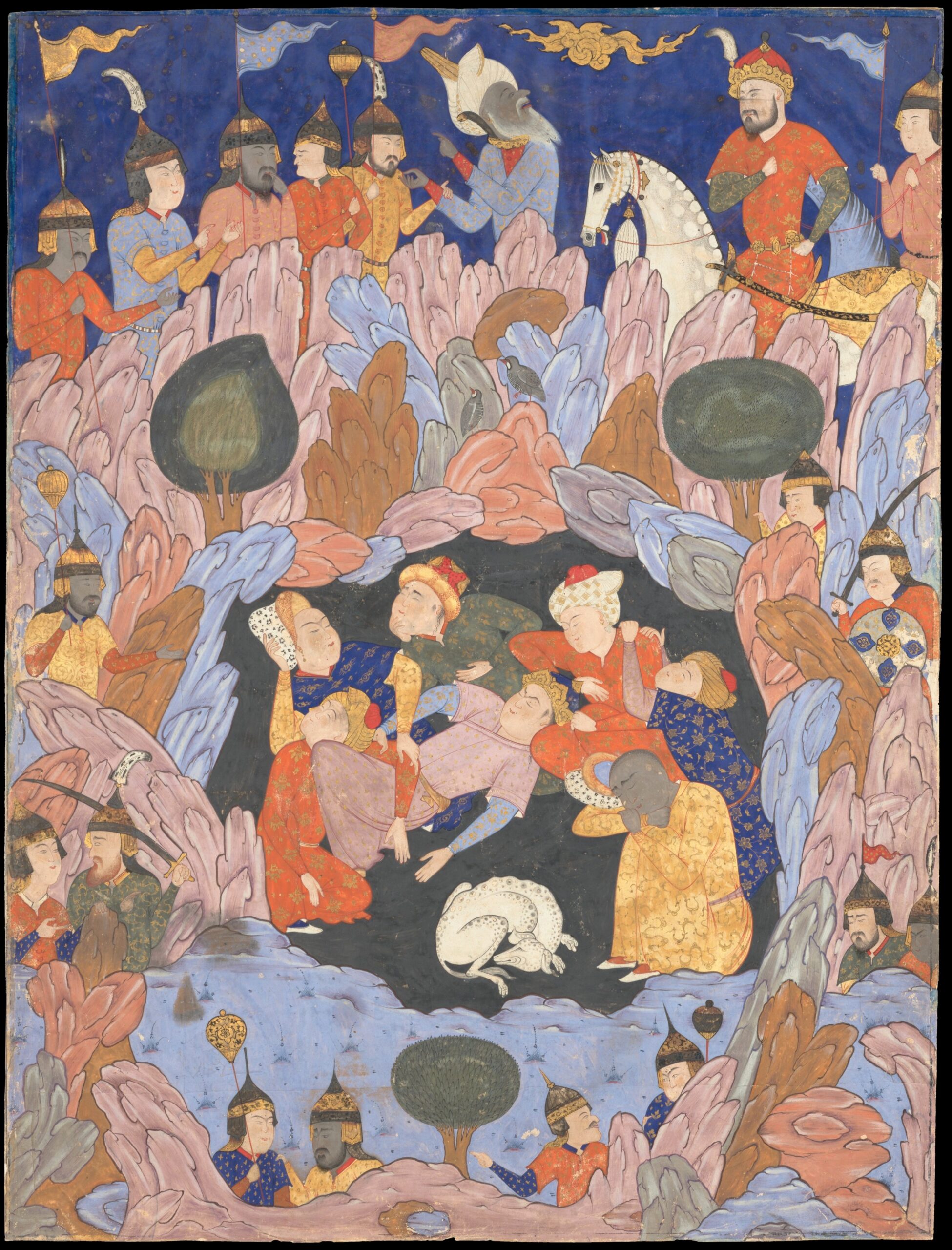
We know in the blessed year of Our Lord 2026 that words matter, and I’m here to pitch that maybe “sleepers” sells these young men a bit short. In fact, Wikipedia uses the phrase “they chose to give their worldly goods to the poor and retire to a mountain cave to pray, where they fell asleep.” Sounds lovely, honestly.
That casts a very different picture than the rest of their story. The Seven Sleepers were isolated and forced to choose between renouncing their faith and bowing to Roman idols. They begged off the torture of the Romans, sold their worldly goods, and found their way to a cave for a nap. The Emperor Decius, who was persecuting those secretly practicing Christianity around AD 250, found them and yet gave them a second chance, as emperors are known to do. But our Sleepy Seven still resisted the insistence to bow to idols and to give up their faith. So, the Emperor became angry, as emperors are known to do, and had the cave sealed with the Sleepy Seven inside, essentially burying them alive.
As the story goes, Emperor Decius died shortly after. Within a few decades, Christianity was no longer a faith to be kept in private but quickly became a religion of the state. Somewhere just outside of Ephesus, years later (either 195 or 373 years, or something like that), a landowner decided he needed to crack open a dusty old cave on his property to get it ready for some cattle, and he was shocked to find not just space for his cows, but also seven sleeping beauties. They awoke, and while no account I read validates this, I imagine them stretching and rubbing their eyes, their voices creaking a bit as the one they sent out into town to buy bread skipped past this landowner. After they awoke, they had made a plan after their “one night of sleep” to continue on, running away from Emperor Decius, but the bread-getter was shocked to find crosses on buildings and that his money was outdated. He returned to the cave to tell his friends that they had not been asleep for one night, but for years, and that Christ continues to reign as king!
The story of these sleepy saints travels through centuries of our faith through the Catholic and Orthodox traditions. There is also a similar version of the story found in the Quran, known as the Companions of the Cave. The feast of the Seven Sleepers of Ephesus is celebrated on July 27th, and they are remembered for both their steadfastness and their willingness to powernap through centuries of change as if it were just one night.
— Becca Kello
Collect for Seven Sleepers of Ephesus
Almighty God, you have surrounded us with a great cloud of witnesses: Grant that we, encouraged by the good example of your servants the Seven Sleepers of Ephesus, may persevere in running the race that is set before us, until at last we may with him attain to your eternal joy; through Jesus Christ, the pioneer and perfecter of our faith, who lives and reigns with you and the Holy Spirit, one God, for ever and ever. Amen.
Thomas the Apostle
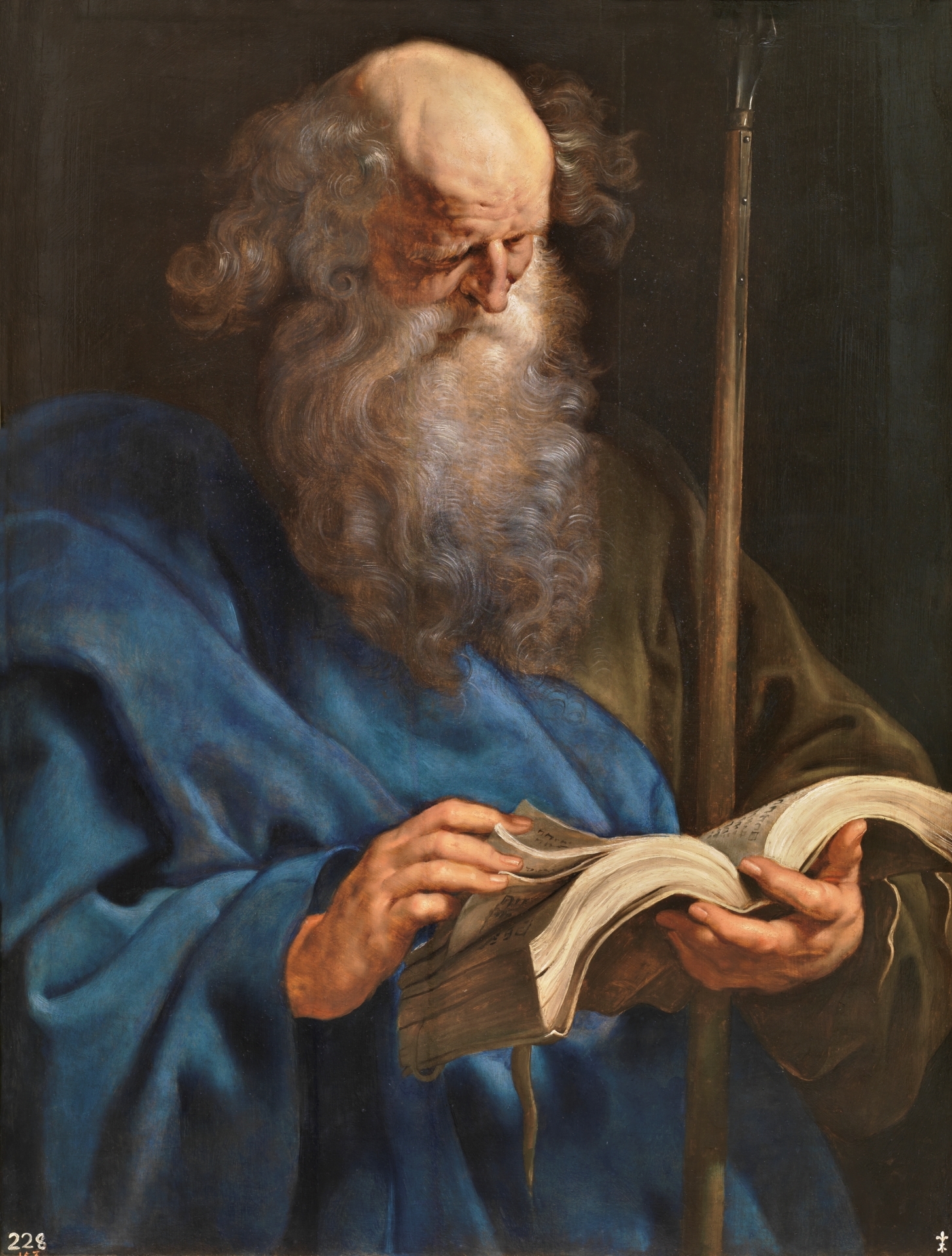
How would you like your name to be forever remembered as part of an epithet, based on one sentence you uttered at a particularly challenging time in your life? That’s what happened to Thomas the apostle, often referred to as “doubting Thomas.” But consider this: while we know almost nothing about where Thomas came from or what he did before he joined Jesus’ ministry, and though his name isn't attached to any Gospel, he’s still one of the 12 you’re most likely to be able to name off the top of your head.
Maybe that’s just because “doubting Thomas” is so catchy (it’s certainly stuck better than his other nickname, “The Twin”). But when we stop to consider not only Thomas’s famous moment of “doubt,” but almost everything he says and does in the New Testament, we start to notice that Thomas is an extremely relatable apostle. You might even think of him as an “audience surrogate,” standing in for us in a handful of gospel lessons.
When Jesus is willing to put himself in mortal danger in order to return to Judea and raise Lazarus from the dead, Thomas encourages the apostles to accompany Christ, but wisely acknowledges that they’ll all be risking their lives (John 11:16). At the Last Supper (John 14:5), it’s not hard to relate to Thomas when he requests more clarity from Jesus about where he’s going and how they can follow him there (“Lord, we know not whither thou goest; and how can we know the way?”).
And in John 20, there’s that famous moment of doubt: Thomas wasn’t there when the other apostles got to see the risen Christ, and when they tell him “we have seen the Lord!” Thomas is not ready to take their word for it. He won’t buy that whoever they’ve seen is really their Messiah, “unless I see the nail marks in his hands and his side.” A week later, he is given just that opportunity, and that’s all he needs to believe. Without Thomas’s skepticism, we would not have received those treasured words from Christ, “blessed are those who have not seen and yet have believed.”
Thomas’s relatability carries on even past the ascension, past the gospels, past the New Testament. When the apostles scattered across the map to spread Christ’s message, Thomas was sent all the way to India. His initial reaction? “Nope.” It was so far away! He wasn’t healthy enough! He would never be able to be a convincing messenger to such a different culture! Eventually, of course, Thomas saw the light (though not before seeing Jesus in a vision, which still didn’t convince him, and then being sold into slavery?!) and founded the first Christian communities in India. While Thomas was martyred in Chennai, in 72 AD, the church he built in the region has persisted through the millennia. There remains a religious community in that part of the world that traces their origins to his mission there — in English, they are called the “Saint Thomas Christians.”
— Marissa Flaxbart
Collect for Thomas the Apostle
Everliving God, who strengthened your apostle Thomas with firm and certain faith in your Son's resurrection: Grant us so perfectly and without doubt to believe in Jesus Christ, our Lord and our God, that our faith may never be found wanting in your sight; through him who lives and reigns with you and the Holy Spirit, one God, now and for ever. Amen.
96 comments on “Seven Sleepers of Ephesus vs. Thomas the Apostle”
Thomas just seems to have done so much more.
The Seven Sleepers for me! We will be traveling to Ephesus in June where, now being informed of their miracle, I hope to feel their presence as I walk among the ruins.
The Orthodox collect for St. Thomas' saint's day blesses him for having "sanctified doubt." Truly, doubt is an essential part of belief because it deepens it and reinforces it. Doubt is us using our human faculties to understand more deeply, a truly sacramental reality. Besides Thomas being my name-saint, I love him because his doubt is the icon for something central to a Christian life.
As a lifelong academic, I consider Thomas's insistence upon verifiable evidence a feature, not a bug.
This was the easiest vote yet. "My Lord and my God!" wins hands down over seven probably apocryphal sleepers.
I suspect the fact he was a twin might be related to Thomas' request for assurance that it was Jesus they had seen. How many times had he been mistaken for his twin brother?
This was actually a tough one. I didn't hesitate to vote for Thomas, but I was unaware of the enchanting story of the Seven Sleepers of Ephesus. Had to admire that they had two opportunties to denounce Christ, yet stayed firm in the faith.
There is no canonical Gospel bearing Thomas's name, but there is most certainly a non-canonical and gnostic Gospel of Thomas. In spite of the omission of this fact from Thomas's write-up, I still voted for the one who teaches us that doubt does not negate the faithfulness of the Risen Christ.
I have personally met several Christians from India whose last names were Thomas. One elderly woman told me quite proudly that it was because of St Thomas!
I had never heard of the Seven Sleepers, and found them interesting, but nothing can be beat Thomas, my favorite apostle. He followed Jesus when it was dangerous to do so. In his grief, he did not at first believe the Resurrection of Jesus. He changed his mind when Jesus appeared to the apostles in the Upper Room, and is the first to acknowledge, "My Lord and My God". How very human and how very perceptive. Thomas for the Golden Halo!
As I am a twin, I had to vote for Thomas, although I have always wondered what happened to his twin- was he still alive at the time of Jesus or had he died? Did he ever ‘come to Jesus’?
The Seven Sleepers held to their faith under pressure from an oppressive and coercive empire. Somehow that seems relevant to me today …
Am I like Thomas because I doubt the story of the seven sleepers?
I voted for the sleepers. In my conversations with my Pastor, Melissa, We remembered our book study of Rest is Resistance. The idea behind this is that it is inhumane to hold people in the grind culture as subjugated to the capitalist goals of our society without letting them renew the self. We make ourselves sick, weak, stressed, and focus on that which is not important enough to give up ourselves. The sleepers amazingly gave up their earthly trappings and focused on themselves by resisting the grind culture of Diocesus and his idols by retreating to somewhere they could focus on personal prayer and devotion. By resting they resisted even when they were buried alive and likely made the oxygen last longer, thus caring for each other. They demonstrate that self care is sometimes the best way to leave the grind culture behind. They were truly rewarded when they were resurrected all those years later. More importantly this is another example of the intersection between the Abrahamic faiths that rarely acknowledge commonality amongst each other.