
We’ve reached the final week of the Round of 32, and we’re starting it with two of our favs✨
First up is Brother Roger of Taizé, martyred just 25 years ago. He founded the community of Taizé where Christians from every denomination could join in community, pray, and worship together as brothers & pilgrims! You’ve likely heard their form of chant and worship, and if you haven’t, give it a listen on Spotify today! What began with Brother Roger using this as a refuge for people fleeing Nazi persecution has grown into a global pilgrimage site welcoming tens of thousands of young people every year. In fact, Fr. Michael and youth from NYC made the journey themselves… and rumor has it a video might be dropping soon. 👀🎥
In the other corner stands Fr. Damien of Molokai, the priest who didn’t just care for people suffering from leprosy, he chose to live among them. Eventually he even bore the disease himself. Damien didn’t simply admire Jesus’ call to love the outcast, he lived it in the most radical way imaginable. 💛
Two extraordinary witnesses. Two very different ministries. One impossible choice.
Read the blogs. Then cast your vote. 🗳️
P.S. Marina the Monk give it everything she had, but the knight proved too strong. Joan of Arc marches on to the Saintly Sixteen. ⚔️
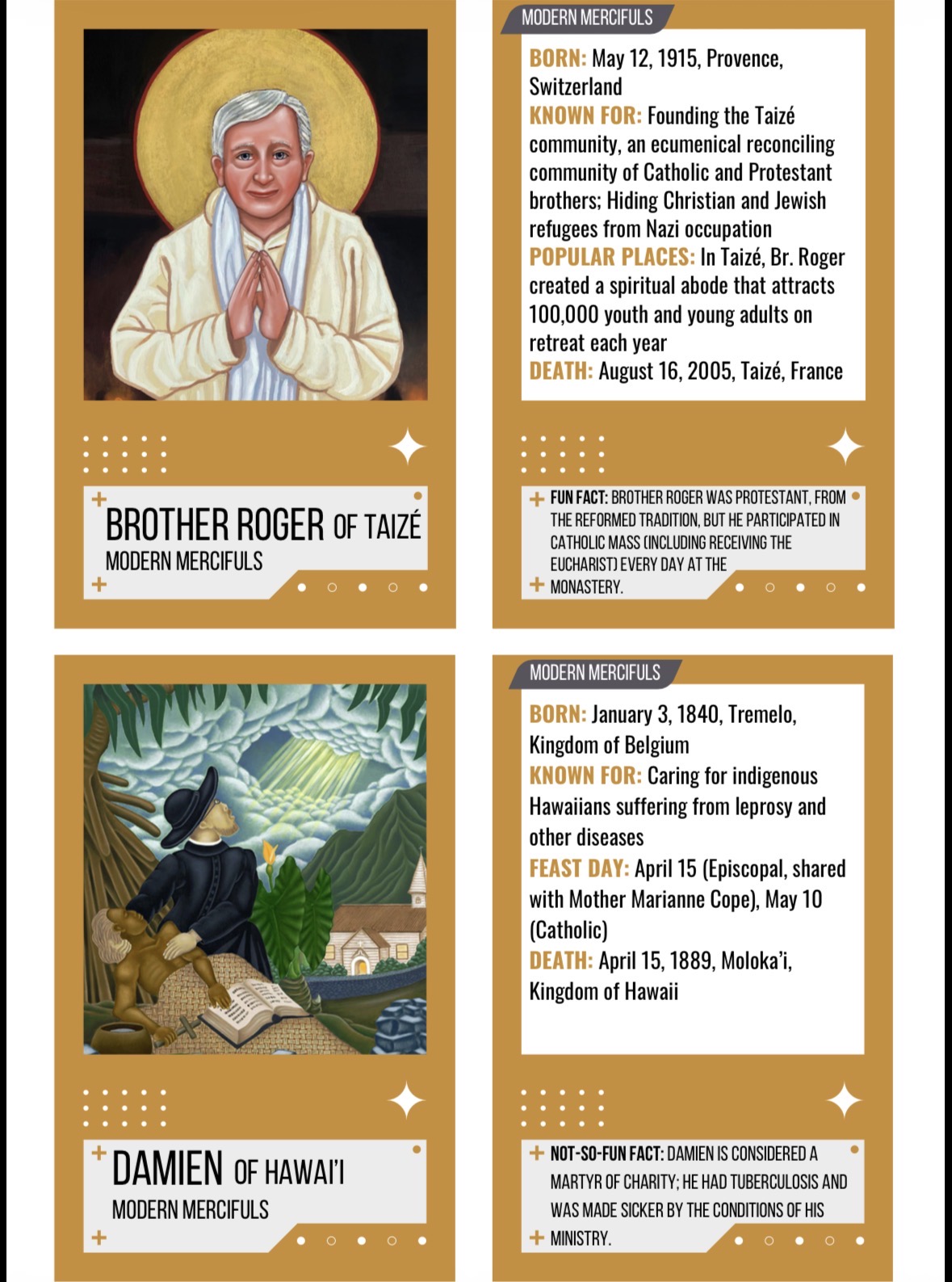
Brother Roger of Taize
Brother Roger of Taizé is a modern-day martyr, a Nazi-fighter, a prolific author, and an uncanonized saint brutally murdered for his non-violent beliefs during worship.
Born Roger Schutz in 1915 in Switzerland, Brother Roger founded the Taizé monastic community in 1940 in Burgundy, France, designed as an ecumenical association. He was the prior of Taizé for 65 years until his public killing in 2005.
As a young man, while studying theology, Roger was stricken with tuberculosis, forcing him into a long convalescence. During this time, he discovered the joys and ways of a monastic life.
At the beginning of World War II, Roger took an initial step by purchasing a home in Taizé, located in unoccupied France. For years, he and his sister hid and smuggled Jews and Christians away from the Gestapo. After the war, the Taizé community grew and welcomed Christian pilgrims of all ages, especially youth.
The community focused on prayer, reconciliation, contemplation, and non-violence. Brother Roger was dedicated to ecumenism among the many Christian factions. His focus was often Christian youth.
Brother Roger lived a quiet, simple life, steeped in prayer and centered on Christianity. He was friends with Mother Teresa and met with various popes including Pope John Paul II.
On August 16, 2005, Brother Roger was stabbed to death in the chapel while deep in meditation during evening prayer. His murderer was a mentally ill Romanian woman. In a twist of fate, she, too, was stabbed in 2011.
His funeral attracted religious and secular dignitaries including the President of Germany and the Minister of the Interior of France. The funeral was presided by a Catholic cardinal, the president of the Vatican's Pontifical Council for Promoting Christian Unity. So many attended that screens were erected outside the church for the thousands who gathered.
Brother Roger’s writings focused on prayer, reflection, and Christian spirituality. His publications list is extensive, starting in 1944 and includes three written with his friend Mother Teresa: Mary, Mother of Reconciliations; Seeking the Heart of God; and Meditations on the Way of the Cross.
His many honors are equally impressive, among them Archbishop Rowan Williams’ Lambeth Cross for Ecumenism; the John Templeton Foundation Templeton Prize; and the UNESCO Prize for Peace Education.
While no particular date is set for him, the Taizé Community and some Anglicans and Episcopalians commemorate him on the anniversary of his death on August 16.
— Neva Rae Fox
Collect for Brother Roger of Taize
O God, whose blessed Son became poor that we through his poverty might be rich: Deliver us from an inordinate love of this world, that we, inspired by the devotion of your servant Brother Roger., may serve you with singleness of heart, and attain to the riches of the age to come; through Jesus Christ our Lord, who lives and reigns with you, in the unity of the Holy Spirit, one God, now and for ever. Amen.
Damien of Hawai'i
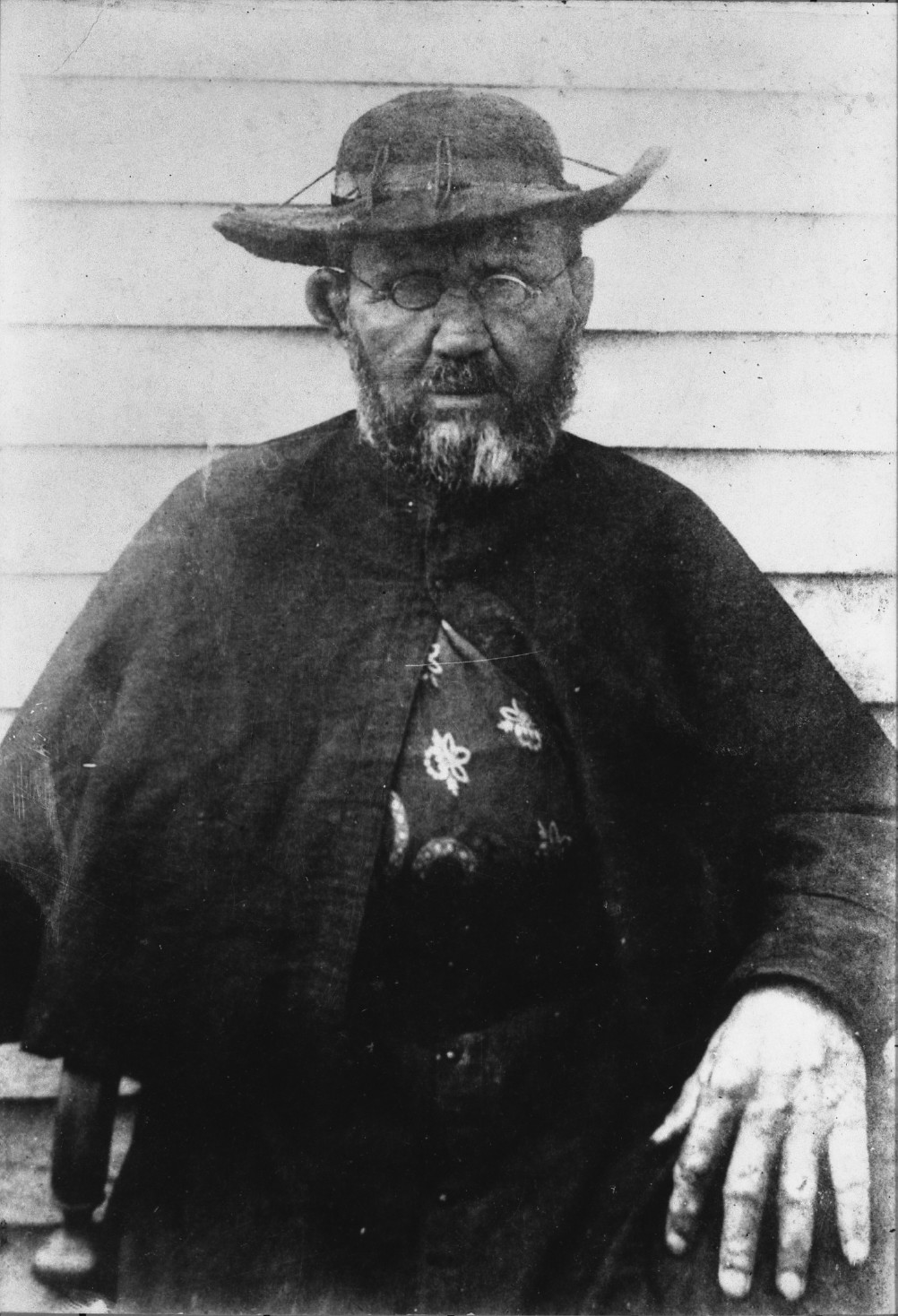
Born Joseph de Veuster in Belgium in 1840, Damien was the youngest of seven children. He was a precocious child who cared deeply for his family. He attended college at Braine-le-Comte and joined the Society of the Sacred Hearts of Jesus and Mary in 1858. Damien was eager for a hands-on mission that would offer personal connection rather than more schooling. The opportunity came in 1863 when his brother, also a priest, became ill and was unable to travel. Damien, not yet ordained, volunteered to replace his brother and chose to leave his family for the Sandwich Islands (modern-day Hawai’i). His request was eventually approved, and in 1864, he arrived in Hawaii and was ordained that same year. Once in Hawaii, Damien became a traveling priest, setting up temporary altars and calling the faithful to Mass with a conch shell. Years later, another volunteer opportunity to serve the much-neglected leper colony on Molokai would change his life.
Arriving on Molokai on May 10, 1873, his eventual feast day, Damien faced his greatest challenge. The strict exile rules for the infected left the island lacking basic infrastructure. Damien immediately began overhauling the village and its inhabitants, building a church and community dwellings and establishing a clean water system, all while calling people to faith. He would advocate repeatedly for his community, serving as both pastor and physician. He demanded resources from his superiors, giving him a reputation for obstinacy. With limited resources, he chose to share equally among all in the colony, ignoring denominational differences in favor of humanity. Damien’s improvements to the island buoyed those infected and fostered a true connection, as they shared food, music, and faith. While it is undeniable that Father Damien enriched the lives of those he touched, in doing so, he also repeatedly exposed himself to the disease. He followed Christ’s example, ignoring quarantine protocol and eating from the same pot, even sharing the occasional pipe with his community.
Father Damien continued to treat the lepers of Molokai with decency and respect, living five years with leprosy before his passing in 1889. In the wake of his death, there was an immediate call for his sainthood, which wouldn’t come until over a century later in 2009. While his moral heroism was irrefutable, even to his detractors, some remained unconvinced of his holiness, an accusation that would be repeatedly disproven. In truth, Father Damien’s example teaches that there is joy to be found among hopelessness, and beauty to be found in misery. Through his sacrifice, Damien serves as a real-world example of how to embody Christlike characteristics. His eventual canonization would bring to Rome a cultural fusion of pilgrims, predominantly from Belgium and Hawai’i, continuing to build community around unlikely companions.
— Tori Proctor
Collect for Damien of Hawai'i
Bind up the wounds of your children, O God, and help us to be bold and loving in service to all who are shunned for the diseases they suffer, following the example of your servant Damien, that your grace may be poured forth upon all; through Jesus Christ our Lord, who with you and the Holy Spirit lives and reigns, one God, for ever and ever. Amen.
80 comments on “Brother Roger of Taize vs. Damien of Hawai'i”
Why does the Supreme Executive Committee summarize that Brother Roger was martyred 25 years ago but the blogger lists his murder as happening in 2005?????
Very difficult decision. Both deserve to win! I wish I could choose both.
I didn't know how I would vote until reaching ".. ignoring denominational differences in favor of humanity." Father Damien today!
Both amazing choices, but Damien voluntarily drank the cup.
To give and give and give again
What God hath given thee
To spend thyself, nor count the cost
To serve right gloriously
The God who made all things that are
And all that are to be.
I didn't know the origins of Taize were in Nazi resistance... which given the state of the US, gives me another reason to vote for him.
I picked Br Roger because his life's work, deeply grounded in ecumenism, was dedicated to binding up the wounds in Christ's body, the Church. I believe the accessibility and beauty of Taize chants sparked a renewal in contemplative prayer among the laity.
We had a Taize song book in the chuch we used to be in. I had to vote for Brother Roger for the music.