
The Hospitallers are celebrating today after Blessed Gerard just eeeked out a win over Julie Billiart 53.85% to 46.15%, making the Order of St. John proud and proving once again that medieval hospital administrators still know how to win a close one.
But now we arrive at the final matchup of the first round!
Today it’s Constance and Her Companions vs. the Martyrs of Uganda.
Constance and her companions come to us from Memphis, where these brave sisters nursed the sick and cared for victims of yellow fever, ultimately giving their lives in service to others.
Across the bracket stand the Martyrs of Uganda, a remarkable group of young Christians, both 🏴Anglican and Roman Catholic🇻🇦 who refused to abandon their faith and paid the ultimate price for their witness.
Care for the sick vs courage before a king. Martyrs of Memphis vs Martyrs of Uganda.
Only one can claim the final ticket to the Saintly Sixteen. Read the blogs, watch the video, and cast your vote! 🏆
Constance & Her Companions
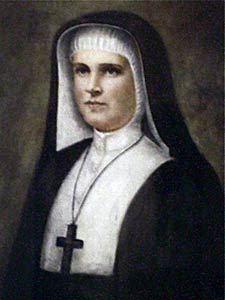
The individual names of the Martyrs of Memphis, except for Constance, might not come to mind quickly, but these holy women and men are well-known for living their lives in Christ and in service to others.
Since Memphis, Tennessee, is located on the Mississippi River, the city and other major hubs along the river’s route were prone to occasional outbreaks of yellow fever, a virus spread by mosquitoes. But August 1878 was different – the epidemic was worse and the impact more severe.
Evacuations were enforced; thousands fled the city. But many could not leave, thereby forcing them to take their chances amidst the epidemic. The death toll rose each day, often reaching 200+.
Despite obstacles, some dedicated caregivers chose to risk their own health and stay in Memphis. Those included episcopal nuns of the Community of Saint Mary, led by Sister Constance, and two clergy colleagues. Of them, only one was trained as a nurse.
Sister Constance, Sister Thecla, Sister Ruth, Sister Frances, the Rev. Charles Carroll Parsons, and the Rev. Louis S. Schuyler are the Martyrs of Memphis. There were two survivors among the caregivers: the Very Rev. George Harris, dean of the cathedral; and Sister Hughetta.
The Sisters were newcomers to Memphis, having just arrived in 1873 to organize a girls' school at the Cathedral. But in 1878, their ministry shifted to meet the needs of a sick and dying community.
Based at the Cathedral, located in the heart of the epidemic area, and battling heat, humidity, and their own illness, Constance and her companions tended to the sick, cooked and served food, offered water to the thirsty, organized relief efforts, and provided homes for children whose parents had died in the epidemic. It did not matter who was in need - how rich or how poor or what nationality – all were treated.
Their compassion was tireless.
Constance, the convent's superior, was the first to succumb, on September 9. Her companions followed quickly.
The six Martyrs of Memphis are buried at Elmwood Cemetery in Memphis. The high altar in St. Mary’s Cathedral is a memorial to the four Sisters.
The Martyrs of Memphis are commemorated on September 9. Not surprisingly, they are the patron saints of those who provide service to the sick and dying.
— Neva Rae Fox
Collect for Constance & Her Companions
We give you thanks and praise, O God of compassion, for the heroic witness of the Martyrs of Memphis, who, in a time of plague and pestilence, were steadfast in their care for the sick and dying, and loved not their own lives, even unto death; Inspire in us a like love and commitment to those in need, following the example of our Savior Jesus Christ; who with you and the Holy Spirit lives and reigns, one God, now and for ever. Amen
Martyrs of Uganda
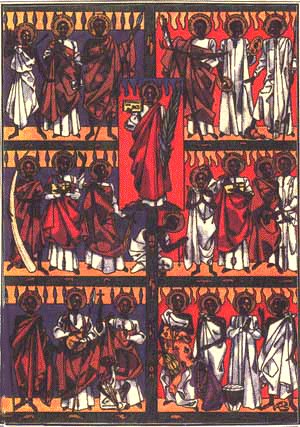
Judging by sheer numbers, today’s matchup isn’t even close. The Ugandan martyrs are 23 Anglicans and 22 Catholics killed by state violence between January 1885 and January 1887.45 saints to 1.Pretty good odds. However, the story of the Ugandan martyrs is complex, inviting prayerful discernment instead of easy comparisons or obvious answers.
Christianity came to the Kingdom of Buganda (the central region of modern Uganda) in 1877 through the work of the Church Missionary Society. These Anglican missionaries were soon followed by Roman Catholic missionaries, joining recently arrived proponents of Islam. The court of the King of Buganda became crowded with converts to each of these three traditions, who — at least at times — seemed to be vying for power and influence.
King Muteesa I, who ruled until 1884, was tolerant of Christianity. His son, Mwanga II, was initially in favor of Christianity, but eventually ordered the murder of a bishop from England and dozens of Ugandan Christians.
The historical record is ambiguous. Were these killings religious persecution? Were they politically motivated? A little of both? Answers are complicated by the sinfulness of European colonialism operating in Africa at the time (and still operating in all its neo-colonial guises today). The first missionaries to Buganda were no doubt entangled in the project of British imperialism, and Europeans used the martyrdoms as colonial propaganda. Does this negate the martyrdom of native Ugandans? Does the sinfulness of a congregational leader somehow lessen the authenticity of a congregation’s faith? Absolutely not, thank God (let every imperfect clergy person say, “Amen”).
It seems that some of the Ugandan martyrs were killed because they defied the king on matters of sexual ethics. Apparently, the king felt he could sleep with whomever, no matter their age. Certain Christians objected and were killed. It is also clear that the faith of those killed was central to their identity and to the witness toward God’s grace and forgiveness, which they, by all accounts, demonstrated at the end of their lives.
Sainthood is often ambiguous, if we’re honest. Even seemingly unexceptional Christian faithfulness gets complicated in the midst of average lives lived in this broken world. And yet, to our surprise and sometimes disgust, God undeniably keeps using ordinary, complicated, flawed people. God even uses us if we let it happen. God keeps on working during morally ambiguous times and under complicated political circumstances; God’s grace and providential purposes still shine through for those who look. God shows up, people are healed, lives are transformed by the Gospel, and sometimes average Christians choose to give up their lives for the sake of Jesus. In our place and time, this is a mystery worth contemplating.
— James Stambaugh
Collect for Martyrs of Uganda
O God, by whose providence the blood of the martyrs is the seed of the church: Grant that we who remember before you the blessed martyrs of Uganda, may, like them, be steadfast in our faith in Jesus Christ, to whom they gave obedience even to death, and by their sacrifice brought forth a plentiful harvest; through Jesus Christ our Lord, who lives and reigns with you and the Holy Spirit, one God, for ever and ever. Amen.
60 comments on “Constance & Her Companions vs. Martyrs of Uganda”
The Martyrs of Memphis should be patron saints of public health and pandemic response. They remind me of the nurses and other health care workers who held the line during COVID. Constance and her Companions for the halo!
Groups of saints…. Two extraordinary groups of people loving and serving. Constance and her companions are devoted to caring for others… yellow fever- yikes!
Martyrs of Uganda…. Africa for me trumps just about anything else. I won’t bore you with why- since I was ten I have been fascinated with this continent . Perhaps this continent like India have so many vulnerable people.
Anyway I am going with the Martyrs of Uganda!
In a pandemic, who do you turn to? Yeah, these are the ones.
Thank you James Stambaugh for the best write-up of the 2026 Lent Madness season. I appreciate how clearly and from a such a deep faith perspective you articulate the complexities of acting in an imperfect world, while trying to serve Jesus.
I, too, appreciated the faith perspective of this write-up, but I would hardly call it the best of the season. I ended up with no sense at all of who these people were or what they did or why I should vote for them.
On this day in 1918,the first reported cases of the Spanish flu epidemic were recorded at Fort Riley Kansas. 46 soldiers would die. Ultimately, 20-40 million people died worldwide. Constance & her Companions get my vote today.
Such a tough choice, but I've always been in awe of the Martyrs of Memphis. Constance gets my vote today
As a medical person myself, I must vote for Constance and her companions. I would only hope to have the courage and faith to provide care for the sick when the likelihood of my death is so great.
I found more info on the martyrs of Uganda that helped clarify the events. https://wau.org/archives/article/the_uganda_martyrs/
Wow, thank you Tiffany for this link. What an incredible demonstration of love and trust in God. They got my vote!
Thank you--I didn't think they received fair treatment in the LM write up today.
I agree. Had I not looked them up last night and learned that these martyrs were young men that faced horrific deaths for their faith, I probably would have voted for Constance and her companions.
Thank you, Tiffany; that was an excellent article! “As the last paragraph said, “Here are young people whose whole life of faith was marked by simple, luminous, joyful trust in God—even in the face of a gruesome death.”
This is an excellent article. Thank you.
I wish this info [https://wau.org/archives/article/the_uganda_martyrs/] had been included. I couldn't tell much about who the actual martyrs were just from the write up shared - I almost had the impression that they may have been members of the missionary groups, and not native Africans. I think knowing that would have made a difference for me. So I ended up voting for Constance et al.
WOW!! Almost wish I had read this before voting.
Thank you, Tiffany, for this link. I am now pondering this story.
This was so powerful and the information in this link changed my vote
I read the above article. It was amazingly impressive. These young people who stood up for their faith against all odds even death. Would we have that kind of faith facing such types of death?
Yes, thanks for this- as the writer says, their times were complicated. But renunciation of enslavement and exploitation of other people is a worthy public witness. For our time and any other.
I also thank you for this link. I am reminded of those being detained by ICE, and those who have died in ICE hands—over two dozen last year and climbing this year as well. Constance has been in Lent Madness before, and I would like to learn more about these young Ugandans.
Thank you, Tiffany, for providing this link with more information on the Martyrs of Uganda. I wish the blogger had included more of this and less of reminders the colonial-imperialist tendencies of some of the White missionaries.
Thank you! This provided a lot more depth than the write up. I feel as if I can make a me informed choice now.
In light of the Epstein survivors, most of whom were but children and teens themselves, I'm inclined toward the martyrs.
I voted Martyrs of Uganda - something a little different, for one thing, and I really liked James Stambaugh's write-up, the willingness to consider our flaws.
As an Associate of the Sisters of St. John the Divine, a Canadian Anglican order founded in the 19th century by Hannah Greer Combe, I cast my vote for Constance and her companions - teachers who turned their hand to the care of the sick and dying during an epidemic. The SSJD also ran schools and founded St. John's Hospital in Toronto, so today was an easy pick for me. Thank you.
(P.S. The hospital is now St. John's Rehab Hospital and the SSJD convent is in its grounds-with a lovely guest house, should you care to visit.)
Catherine Craker hit the nail on the head. Sacrificing one’s life so others might live is hard to compare to any other act.
One of the things I love about our Episcopal traditions is the invitation to struggle with all the ambiguities and contradictions life offers. The Martyrs of Uganda bear more investigation and get my vote today
A difficult decision but I voted for the Ugandan Martyrs. (The Martyrs of Memphis are more than worthy of their lead.)
When my wife and I were living in PA we went to an Episcopal church in Paoli. They had a relationship with the Diocese of Kampala and thru this we met Bishop Evens Kisekka and his family. They stayed with us once and we got to know them. Thru Evens we had a taste of the fervor of the Ugandan Christians. And an interesting talk about the Martyrs of Uganda.
Historians think that one factor in the spread of Christianity in pagan Rome was that Christians did not abandon their loved ones during plagues, as pagans often did. They believe many did not die of the disease but of dehydration and hunger. Christians, not having the pagan terror of death, nursed their abandoned neighbors, which was a powerful witness to their faith. The witness of Constance and her companions, which was not entangled in colonialism or politics, is heartbreakingly simple and clear.
I appreciated the nuanced write-up for the martyrs of Uganda. I am mindful of the ongoing violent legacy of colonialism as we struggle to face the consequences of this history and to recognize our part in an inequitable, unjust arrangement of the world’s resources. Today our allegiance has to be to the global south and their aspirations, so I am voting accordingly.
A heart-rending story, Tiffany Myers, thank you for the link. But I do tend toward those who serve over those who suffer, however blessedly.
While I appreciate the sacrifice of the Martyrs of Uganda (and now because of Lent Madness I will learn more about them on my own), I voted for Constance and her companions. I find the latter to be more relatable, somehow. I found the write-up of the Martyrs of Uganda to be a little aggressive.
Neva Rae does it again! Constance & Companions get my ladies vote today!
I like the almost musical alliteration of Martyrs of Memphis!
I really found the last paragraph of Martyrs of Uganda very inspirational. Thank you.
I thought this would be another very close one. Boy, is this a surprise.
James, thank you for your very thoughtful piece around the Martyrs of Uganda.
As an Episcopalian and resident of the Memphis area, I had to vote for the hometown sisters whose deeds and memory are commemorated annually in September at St Mary’s Cathedral and the school they founded here.
This was a hard choice for me. I'm drawn to the Memphis sisters and clergy (especially because of Sr Thecla, since Thecla is one of my favorite saints): their heroic service in a time of plague reminds me of St Elizabeth Ann Seton (whose shrine I have visited) and her sisters caring for the wounded and the dead in the US Civil War.
And the situation in Uganda seems muddied by, well, everything that muddies a royal court or its equivalents.
But.
The particular circumstances of their deaths is similar enough to the sexual abuse of children (and other vulnerable people) by clergy (and other powerful people), and its subsequent coverups by clergy and bishops, that as a Catholic I'm impelled to vote for them.
Martyrs of Uganda, pray for us: for the victims, for the perpetrators, for those who are willingly or unwillingly complicit in the coverup, and for the people in power who looked away when they could, and when they could no longer look away, placed their personal and institutional interests above those of the sheep in their care that had been ravaged by wolves.
Through your intercession, may God comfort the victims, convert the perpetrators, and heal the Church. Through Christ our Lord, Amen.
I voted for Constance and her companions because I was not feeling up to moral ambiguity today.
I deeply appreciate James write up. He adroitly acknowledges the complexity of living as a follower of Christ in a complicated world. And he doesn't shy away from acknowledging the role of colonialism in that world and in the church up to this day. Thanks James.
My MIL's natal church was renamed from St. Agnes to Martyrs of Uganda. On the occasion of a family event, the congregation welcomed us so warmly and lovingly despite the 60 year gap. My vote goes to them.
How could I not vote for Constance? I spent weeks at the Convent of St. Mary while it was in Peekskill, NY, sometimes helping the sisters make communion wafers (when they still did). They were instrumental in my call to the diaconate.
My saintly mother-in-law was named Constance and she lived up to her name. And James’ commentary on the Martyrs of Uganda was also persuasive. “God’s grace and providential purposes still shine through for those who look.” I chose Constance for her constant witness and steadfast ministry to the sick and dying.
My husband was raised in Memphis, and his parents still live there, after many years working hard for the public school system within a city that's often embattled and harassed by the rest of the state of Tennessee. Gotta vote for Constance today.
As a potential southerner. Gotta go with the Tennessean.